Importance of data backup
Imagine that you are on your computer at work when suddenly all of the lights go out and the computer shuts down. After a few minutes the power is restored. You reboot your computer only to find that an error message appears. It tells you that a fatal error occurred, that some important data has disappeared. Situations such as this happen all too often the good news is that there are key safeguards, one of which is data recovery that can significantly reduce their occurrence.

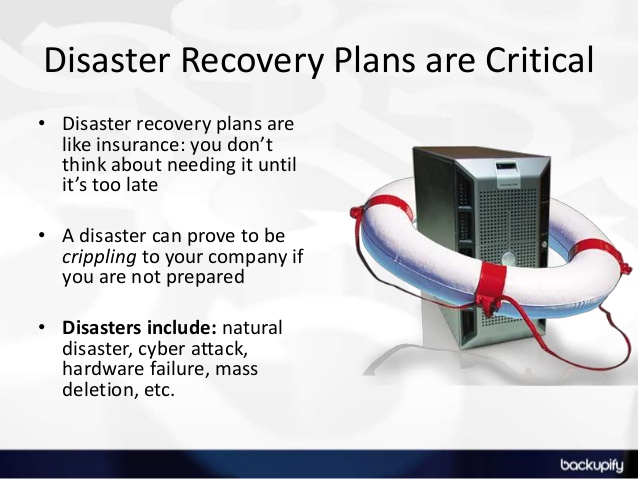
The most fail-safe method of preparing data recovery are data backups. Data backup refers to the copying of computer’s information so that these copies may be restored through data recovery process after some fatal event. Backups are useful primarily for two purposes: to restore a computer to an operational state following an accident (also called disaster recovery), and to recover information files after they have been deleted or corrupted (file or data recovery).

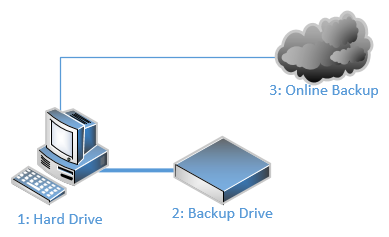
A disaster recovery plan (DRP) is a documented process or set of procedures to recover and protect a business IT infrastructure in the event of a disaster. Such aplan, ordinarily documented in written form, specifies procedures an organization is to follow in the event of a disaster
We Design the perfect recovery and disaster plan for your business